


My Hero Academia has revealed the full preview, synopsis, and production staff for its upcoming Eri-focused short anime, adapting a chapter from the manga anthology My Hero Academia: Ultra Age. The standalone short premieres August 2 on Crunchyroll, making it the first new animated MHA content since the main series wrapped with Episode 170 on December 13, 2025. For a franchise that spent a decade building one of shonen's most emotionally resonant supporting casts, choosing Eri (not Deku, not a newly credentialed Pro Hero) as the subject of its animated comeback is a deliberate creative statement — one that says something real about where the production committee wants to take things next.
The synopsis places a high-school Eri on the cusp of her first street performance, with Deku conspicuously absent
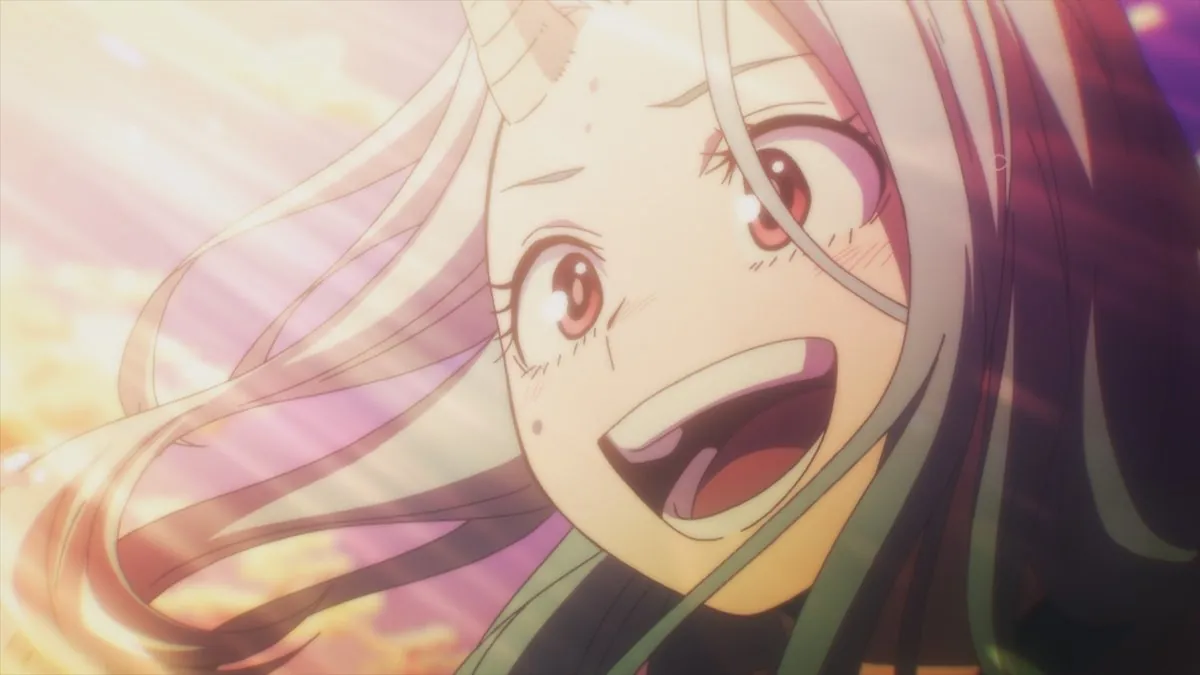
According to the official synopsis, Eri is now a high school student pursuing a dream of making music. With a street performance scheduled for the weekend, she visits U.A. High School, where Aizawa, Present Mic, and the others welcome her back. Izuku, now working as a teacher, is nowhere to be seen. Something appears on television before the day of her performance finally arrives. That is the full shape of it: quiet, slice-of-life, concerned with Eri's interior world rather than a threat to be punched through.
The preview images reinforce that tone. These are not action compositions or cliffhanger teases. The stills show Eri in an everyday school setting, the kind of imagery the main series rarely had room for once its stakes kept escalating. Deku exists here as a named absence, not a protagonist reclaiming screen time. That structural choice tells us almost everything about the short's priorities before a single frame has aired.
The production staff is a proven MHA unit anchored by series veterans Yosuke Kuroda and Yoshihiko Umakoshi
The crew confirmed for the short reads as a deliberate institutional continuity move. Yosuke Kuroda, who served as series composer across MHA's entire television run, handles the screenplay here. Yoshihiko Umakoshi, the animation director whose stylized linework became synonymous with the show's visual identity, returns as one of two animation directors, joined by Hitomi Odashima. Naomi Nakayama handled the storyboard; Tomo Okubo directs the episode. This is not a B-team production. Kuroda and Umakoshi's involvement signals the production committee is treating this short as canon-adjacent work rather than supplemental product shipped to keep a license warm.
| Detail | Eri Short | Main TV Series |
|---|---|---|
| Format | Standalone short | 170 episodes across 7 seasons |
| Source material | Ultra Age anthology chapter | Weekly Shonen Jump manga (2014–2024) |
| Premiere | August 2, 2026 | April 3, 2016 |
| Platform | Crunchyroll | Crunchyroll / Funimation |
| Narrative focus | Eri (supporting character) | Izuku Midoriya and Class 1-A |
| Key staff | Kuroda, Umakoshi, Odashima, Okubo | Kuroda, Umakoshi (series-long core) |
Eri's Overhaul arc was the emotional backbone that separated MHA from every other tournament-bracket shonen of its era
For readers coming in fresh: Eri was introduced during the Shie Hassaikai arc, the story that pitted a young Deku and Mirio Togata against the crime lord Overhaul. She was a child whose Quirk, Rewind, could roll a person's body back to a prior physical state — a power Overhaul had weaponized to manufacture Quirk-erasing drugs by destroying and rebuilding her. The arc functioned as a thesis statement on what heroism actually costs. Mirio loses his Quirk protecting her. Deku shatters every limit he had set. The image of Eri smiling for the first time at the school festival, Deku playing guitar and Jiro singing on the stage below, became one of those rare anime moments that distills an entire season's emotional accumulation into about ninety seconds.
The short anime is building directly on that foundation. A story about Eri in high school, preparing to perform music in public, is a callback to that festival scene in structure and in feeling. The creative team is not being subtle about it, and that is exactly the right call.
The first post-finale MHA animation is not a sequel, a spin-off, or a teaser for what comes next. It is a quiet check-in on a kid who earned her happiness one brutal chapter at a time — and that restraint is the whole argument.
Choosing a standalone short over a sequel suggests the franchise is taking a measured breath rather than rushing the next chapter
Kohei Horikoshi's manga ran in Weekly Shonen Jump from July 2014 through August 2024, a ten-year run that closed with congratulatory messages from across the industry. The anime, produced by Bones, ran from April 2016 and finished with Episode 170 in December 2025. That is roughly seven months of silence before this short. Compare that to franchises that announce sequels within weeks of a finale, and the MHA camp looks almost patient by comparison.
That patience is also visible in what Horikoshi himself is doing next. His first new published work is a 61-page horror one-shot titled Don't Laugh, Shijima-san, dropping in Weekly Shonen Jump Issue 37/38 on August 10 — a genre detour that signals he is in no hurry to return to Plus Ultra either. For a parallel look at how another major shonen franchise is navigating the pressure of its own final stretch, our coverage of BLEACH: TYBW Part 4's deliberate pacing through The Calamity's opening episodes shows just how differently studios can handle a conclusion when they have the confidence to slow down.
- Eri's unresolved arc weight. She carries more emotional history than almost any other MHA supporting character; the short does not need to manufacture stakes because the source material already laid them down across three seasons.
- Staff continuity as a quality signal. Kuroda and Umakoshi's involvement means tonal consistency is structurally built in — not something the short has to earn from scratch.
- The Ultra Age anthology source. Because the chapter comes from an anthology rather than a new serialization, this is a considered standalone piece, not the opening move of a broader adaptation pipeline.
- Crunchyroll platform access. Streaming the short on Crunchyroll keeps the franchise inside the same ecosystem its Western audience has used since 2016, but the platform's recent catalog management decisions are a useful reminder that streaming access is never as permanent as it looks — watch it on launch day if you can.
August 2 on Crunchyroll is when we find out whether the short earns its place or settles for nostalgia
Short-form anime adaptations of anthology chapters can land as genuinely resonant pieces of character work, or they can read as extended promotional materials with a runtime attached. The production credentials here argue for the former. Kuroda knows how to pace Eri. Umakoshi knows what she looks like when she is afraid and what she looks like when she is not. The story is modest by design: a girl making music, nervous about a small stage, noticing the absence of the teacher who helped her get there.
Modest is not a criticism. Modest, done right, is exactly what a post-finale MHA needs before anyone starts talking seriously about sequels. The short premieres August 2 on Crunchyroll. If you are thinking about the longer question of what a completed manga means for the ongoing shape of its anime adaptation, that question is very much alive for MHA too — and how this short performs will inform every production conversation that follows it.


