


The Criterion Channel announced on July 30 that it will stream Neon Genesis Evangelion, Evangelion: Death (True)², and The End of Evangelion beginning September 1, 2026. The TV series — directed by Hideaki Anno, produced by Gainax, and originally broadcast on TV Asahi from 1995 to 1996 — arrives alongside the 1997 theatrical film on a platform whose curatorial logic functions as an institutional argument about what cinema is worth preserving. For anime, that argument just acquired its most authoritative endorsement yet.
The Criterion Selection Process Is an Institutional Statement, Not a Licensing Arrangement
The Criterion Collection does not add titles by algorithm or audience demand. Its catalog is a curatorial position: each entry carries the implicit claim that the work belongs in the conversation about artistically and culturally significant cinema. The Channel extends that logic to streaming without diluting it. When Criterion places NGE alongside Ingmar Bergman, Akira Kurosawa, and Agnès Varda, it is making a formal declaration about Anno's standing as a filmmaker, not just offering anime fans a convenient place to watch.
Prior anime on Criterion has been almost entirely Studio Ghibli. Miyazaki functions as a legible auteur by Western critical standards, a single-artist feature-film model that critics could process without revising their assumptions about the medium. NGE is a harder argument. It is 26 television episodes structured around psychology, mecha combat, and religious iconography, followed by a theatrical film the director produced partly in response to receiving death threats from fans who resented his original finale. That is not prestige animation in the conventional sense. Criterion adding it is a genuine editorial position.
NGE Has Always Been Art Cinema; Western Institutions Just Needed Thirty Years to Admit It
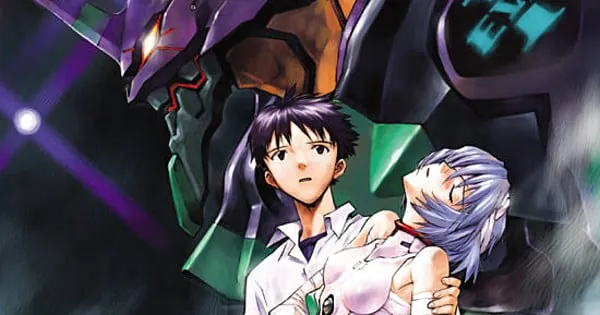
Anno built Evangelion at the intersection of kaiju cinema, tokusatsu live-action tradition, and his own documented clinical depression. The series is formally eccentric even within the framework of TV anime: it interrupts itself with still frames, wall-text inserts, and interior monologue that reads closer to literary prose than action-cartoon narration. The End of Evangelion reconstructs and contradicts the TV ending while treating the audience's desire for catharsis as something to be interrogated rather than delivered. It is a formal choice that places the film in the same territory as Michael Haneke or Lars von Trier, not alongside conventional genre animation.
None of that required thirty years to understand. What took three decades was Western critical infrastructure acknowledging that anime could operate this way at all. As our coverage of Demon Slayer: Infinity Castle's Critics Choice nomination argued, the route to Western institutional recognition for anime has almost always required a familiar critical frame borrowed from another medium. NGE is finally getting the frame it warranted in 1997.
| Work | Year | Medium | Milestone |
|---|---|---|---|
| Neon Genesis Evangelion | 1995–96 | TV anime | Criterion Channel debut, September 2026 |
| The End of Evangelion | 1997 | Theatrical film | Criterion Channel debut, September 2026 |
| Shin Godzilla | 2016 | Live-action co-direction | Japan Academy Film Prize, Picture of the Year |
| Evangelion: 3.0+1.0 Thrice Upon a Time | 2021 | Theatrical film | Concluded the four-film Rebuild of Evangelion arc |
Shin Godzilla Gave Western Film Culture a Usable Frame for Anno's Ambitions
The clearest evidence that Anno's anime reputation needed a live-action bridge is what Shin Godzilla (2016) accomplished. The film won the Japan Academy Film Prize for Picture of the Year — the first tokusatsu production to do so — and that recognition, expressed in the language of conventional film awards, made Anno legible to critics who had never seriously engaged with Evangelion. He became "the director of Shin Godzilla" in Western cultural coverage, and the anime could be re-approached through that designation. It is a backwards way into a body of work. It is also, historically, how institutional legitimacy tends to move.
Anno did not make Evangelion for the art-cinema canon. He made it despite an industry that had no category for what it was. Criterion finding that category in 2026 is the institution catching up, not the work arriving.
The pattern across Anno's career is consistent with how Western film culture processes anime most comfortably: auteur designation comes first, medium second. Miyazaki had it from the beginning, which explains why Ghibli features were the natural early residents of Criterion's anime holdings. Anno acquired it through a lateral move into live-action. That credibility now travels back to his original medium in full.
Streaming Rights Volatility Makes a Criterion Home Worth More Than a Standard License
NGE's rights history has been complicated enough that its availability on any given platform at any given moment has not been reliably stable. As our reporting on Crunchyroll's silent catalog deletions documented this month, anime's streaming landscape is more volatile than most viewers assume: titles vanish without announcement, licenses expire, and catalog depth can shift overnight. A Criterion presence carries different institutional weight. The Collection's model is built around archival permanence and contextual framing, which makes a title a reference point rather than a catalog item subject to the next rights negotiation.
- Curatorial selectivity. Criterion adds titles on grounds of artistic and cultural significance, not engagement metrics. The selection itself functions as critical validation independent of streaming performance.
- The Ghibli precedent. Miyazaki's films established that anime could belong in Criterion's library, but the Ghibli frame was narrow; NGE extends it to non-feature, psychologically demanding television work that resists easy categorization.
- Anno's cross-medium standing. Shin Godzilla's Japan Academy Film Prize win positioned Anno as a significant live-action filmmaker, giving critics a familiar entry point back into his anime output that the Evangelion series alone had not reliably provided.
- Archival stability. Unlike rotating streaming licenses, Criterion's curation model implies long-term commitment, a meaningful distinction for a series whose availability has historically been subject to rights volatility.
The 422,000 attendees at Anime Expo 2026 represent a medium operating at a cultural scale that institutional film criticism has been slow to acknowledge in full. The Criterion addition is overdue. It is also, in the way these recognitions tend to work, perfectly calibrated to the moment: landing when the argument it makes has already been won in every corner of the culture that actually counts.
September 1, 2026 is the date to mark. That is when the Criterion Channel's NGE catalog goes live, and when the platform's next curatorial move becomes legible. If the curation team treats Anno's arrival as a singular auteur exception, the library stays narrow. If it reads as an opening argument for non-Ghibli anime in the art-cinema canon, Akira, Ghost in the Shell, and Perfect Blue each have a reasonable brief. Satoshi Kon's entire filmography does too. September 1 will not answer that question on its own, but it will tell us whether Criterion is even asking it.


