


An innocent man spent 18 months in a prison cell because police encountered his Skyrim username and had no framework for understanding what it actually meant. PC Gamer reported this week on the case, in which law enforcement confronted a gaming handle built from Skyrim's in-universe dramatic language, treated it as a credible real-world threat, and made an arrest. No conviction followed. The 18 months were already spent, and nothing a court produces returns them.
This is not a cautionary footnote about one overzealous precinct. It is a documented instance of the cost — measured in a specific person's specific time — of institutional digital illiteracy. Until police departments build formal consultation channels for cases involving gaming-adjacent speech, the conditions for repeating it are fully intact.
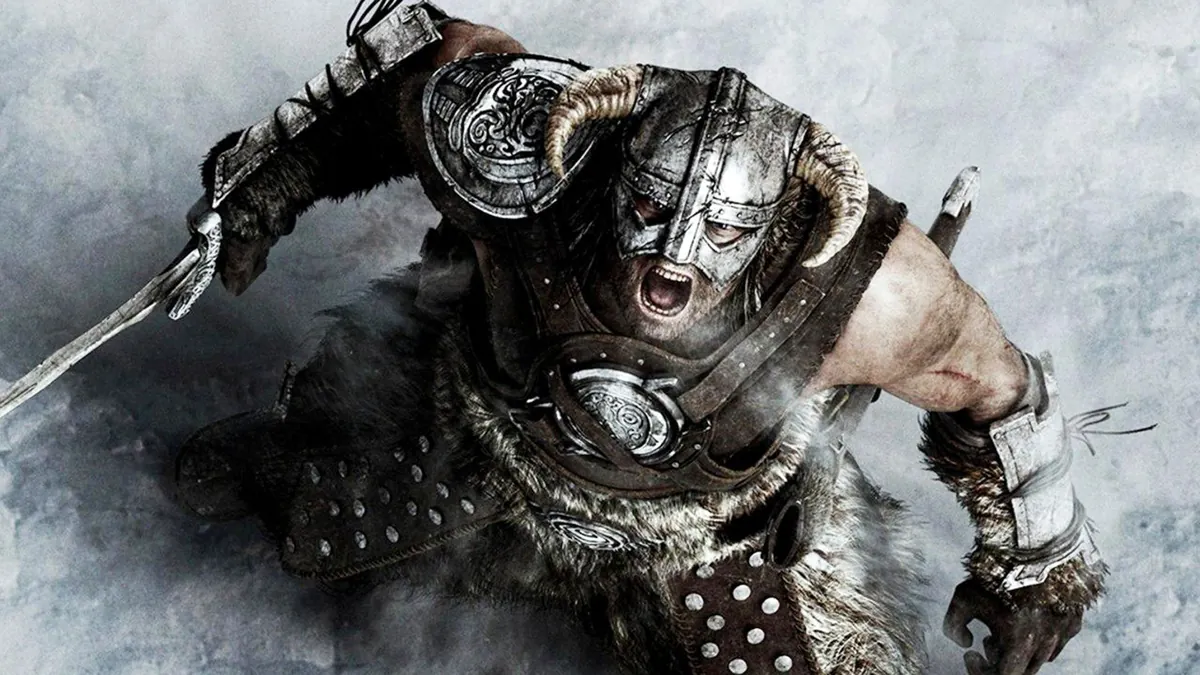
The Username Was Drawn Straight From Skyrim's Villain Vocabulary — Police Had No Lens to Read It
Bethesda's 2011 open-world RPG did not invent the convention of naming your online avatar after something ominous, but it perfected the template. Skyrim's lore is saturated with portentous, violent-sounding language by design. The Dragon Language, spoken by Alduin the World Eater and the Dragonborn protagonist alike, is built around destructive power words: "KRII LUN AUS" translates as "Kill Leech Suffer," deployed in the Marked for Death shout. Daedric Princes carry names like Molag Bal, lord of domination, and Mehrunes Dagon, prince of destruction. The Dark Brotherhood, Skyrim's assassin guild, conducts itself entirely in the vocabulary of cold-blooded murder as a matter of institutional identity within the game world. Players absorb all of this and carry it into their online handles without a second thought — because inside the culture, it registers as creative identification, not declaration.
Per PC Gamer's reporting, the man's username drew on exactly this kind of in-universe language: the type of dramatically aggressive phrasing that reads as a roleplayer's creative choice to anyone inside gaming culture, and as a literal statement of violent intent to anyone outside it. Police, encountering the username through whatever avenue triggered their investigation, escalated to an arrest. He was held for 18 months before any legal resolution occurred.
Eighteen Months Is Not a Holding Period — It Is Functionally a Sentence for a Crime That Did Not Exist
The timeline is where the case becomes impossible to treat as an administrative error. Eighteen months is not the duration of a misunderstanding being clarified while someone waits at home. It is a stretch of time longer than many sentences handed down for offenses that were actually committed. PC Gamer's report confirms no conviction was secured — the charges could not survive scrutiny — but the legal outcome tells only part of the story. A conversation with anyone who owned a copy of Skyrim, conducted in the first few hours after the username was flagged, could have prevented the arrest entirely.
No formal statement from the relevant police department had been issued at the time of PC Gamer's reporting, and no indication of compensation or official acknowledgment of categorical error appeared in the coverage. That absence is itself telling. When a mistake of this magnitude produces no named policy response, the default conditions that produced it remain fully in place.
"Eighteen months in prison for a Skyrim handle is not an aberration in an otherwise literate system. It is the system working exactly as it was configured — which is to say, without any configuration for digital culture at all."
Gaming Has Always Spoken in the Register of Conquerors and Monsters — That Convention Is the Load-Bearing Fact
The cultural context here is not esoteric. Online gaming identities have borrowed villain names, apocalyptic titles, and hyperbolic threat-language since the dial-up era. "xX_DeathBringer_Xx" is not a red flag; it is a formatting convention from 2003 that never entirely died. "Alduin_Reborn," "DovahkiinSlayer," "WorldEater99" are natural outputs of a culture that processes its entertainment by wearing its vocabulary. The same phenomenon runs through every subculture with a robust canon: a Tolkien fan calling himself "Sauron" online, a Star Wars player going by "EmperorPalpatine_Lives," a Warhammer 40K enthusiast whose handle references a Chaos god. The phrasing is theatrical. The intent is identification.
We can document this pattern across multiple contexts. Swatting incidents — where gaming rivalries escalate to false emergency calls — have repeatedly involved first responders who lacked any baseline for distinguishing in-game beef from genuine threat, with deadly consequences in several documented US cases. Chat logs from tactical shooters have been flagged as planning documents in multiple jurisdictions; the actual content was match strategy discussion. Each incident shares the same structural failure: an institution encounters gaming culture's native idiom with no translator present.
- In-universe villain adoption. Skyrim players routinely take on the names and titles of Daedric Princes, the Dark Brotherhood, and World Eater mythology. These are character-play choices, no different from a stage actor inhabiting a murderer for a performance.
- Hyperbolic competitive vocabulary. Phrases like "I'll destroy you," "extinction event incoming," or "prepare to be eliminated" are standard competitive gaming banter — alarming only to someone who has never read a match lobby.
- Genre-coded violence terms as neutral metrics. "Kill count," "execute," "annihilate," and "obliterate" function as scoring vocabulary in dozens of games. They describe in-game actions, not biographical intentions.
- Roleplay persona naming conventions. A username containing "Assassin," "Executioner," or "Warlord" maps to a character archetype across Hitman, Assassin's Creed, Total War, and a hundred other titles — it signals genre fluency, not personal biography.
| Context | In-Community Meaning | External Misreading | Documented Outcome |
|---|---|---|---|
| Skyrim username (this case) | In-universe roleplay identity; villain/lore vocabulary as handle | Literal declaration of real-world violent intent | 18 months imprisoned; no conviction secured |
| Tactical shooter chat logs (multiple jurisdictions) | In-game strategy and callout discussion | Operational planning documents for real-world violence | Investigated; released after context established in several cases |
| "Kill Confirmed" and CoD game-mode terminology | Named Call of Duty multiplayer scoring mode; standard scorestreak language | Admission or threat of homicide | Flagged and investigated; no charges in documented instances |
| Swatting cases with gaming handles as evidence | Competitive bravado; hyperbolic rivalry phrasing | Credible imminent threat requiring armed response | SWAT deployment in multiple US cases; several ended in fatalities |
The Pokémon Company's decision to roll out mandatory facial recognition at card stores in Japan — collecting biometric data from children to fight scalping — is a different institutional failure in a gaming-adjacent space, but it has the same structural shape: an organization reaching for the wrong tool in a cultural space it hasn't fully mapped. What connects these cases is not malice. It is the gap between a community's internal logic and the frameworks the institutions surrounding it actually use.
The Fix Is a Single Consultation Protocol — and Most Departments Are Simply Not Building One
The systemic answer here is not complicated. Every major metropolitan police department has officers who play video games. Making qualified staff available as consultants — specifically when a case hinges on the meaning of digital speech in a gaming-specific context — is a policy decision, not a resource constraint. Several civil liberties organizations and legal scholars have called for formal digital-literacy review steps before gaming-adjacent speech is treated as actionable threat intelligence. Those recommendations remain non-mandatory across virtually every US jurisdiction, and uptake is inconsistent at best.
Bethesda, the studio that built the world whose language put an innocent man in prison for 18 months, has its own unresolved institutional accountability story: the Bethesda Montreal team was cut with minimum severance on the same day as a Fallout announcement. These are different scales of problem. But the responsibility for understanding Skyrim's vocabulary — before treating it as evidence of criminal intent — rests entirely with law enforcement, and that responsibility currently carries no enforcement mechanism.
The next development that determines whether this case generates any lasting change: whether the man or his legal team files a civil claim, and whether the jurisdiction involved publishes a named review of its digital-speech assessment protocol before the next arrest. Without a policy instrument attached to this outcome, the case is instructive and fully repeatable. The next person with a dramatic Skyrim handle is already online. The question is whether the precinct that encounters him will have any better tools than the one that didn't.


