


Marvel used its Next Big Thing panel at San Diego Comic-Con 2026 to announce three original series launching exclusively on WEBTOON, marking the first wave of what the publisher is calling Marvel Originals. The three titles are X-Men Korea from South Korean studio Studio LICO, Tony’s Girl by writer CRC Payne and artist StarBite, and a Deadpool isekai announced alongside them. Each series is commissioned from the ground up for the platform rather than adapted from existing print material, which puts this in a fundamentally different category from the 20-plus Marvel comics WEBTOON already carries through its Disney section.
Marvel Originals Is a Commission Program, Not a Distribution Deal
WEBTOON already carries more than 20 Marvel comics in vertical-scroll format through its Disney section, but those are presentations of existing material. Marvel Originals changes the terms entirely. As AIPT’s David Brooke reported from the panel, each title “debuts exclusively on WEBTOON with stories and characters crafted for the digital reading experience.” That phrase is doing real work: these are greenlit projects with WEBTOON-native creators attached from day one, not warehouse inventory finding a second home on a new platform.
The commercial logic is straightforward. WEBTOON’s global readership runs in the hundreds of millions, with especially deep penetration in South Korea and a fast-growing US base that skews younger and far more genre-diverse than the direct market. Marvel’s print line in 2026 has been assertive — Maximum X-Men, twice-monthly Iron Man, and a packed post-Armageddon slate all confirmed at SDCC — but all of that has a ceiling set by the size of the existing comics-buying audience. WEBTOON Originals runs parallel, targeting readers who may never walk into a comic shop.
X-Men Korea Puts Studio LICO in Charge of a Genuinely Korean Mutant Story
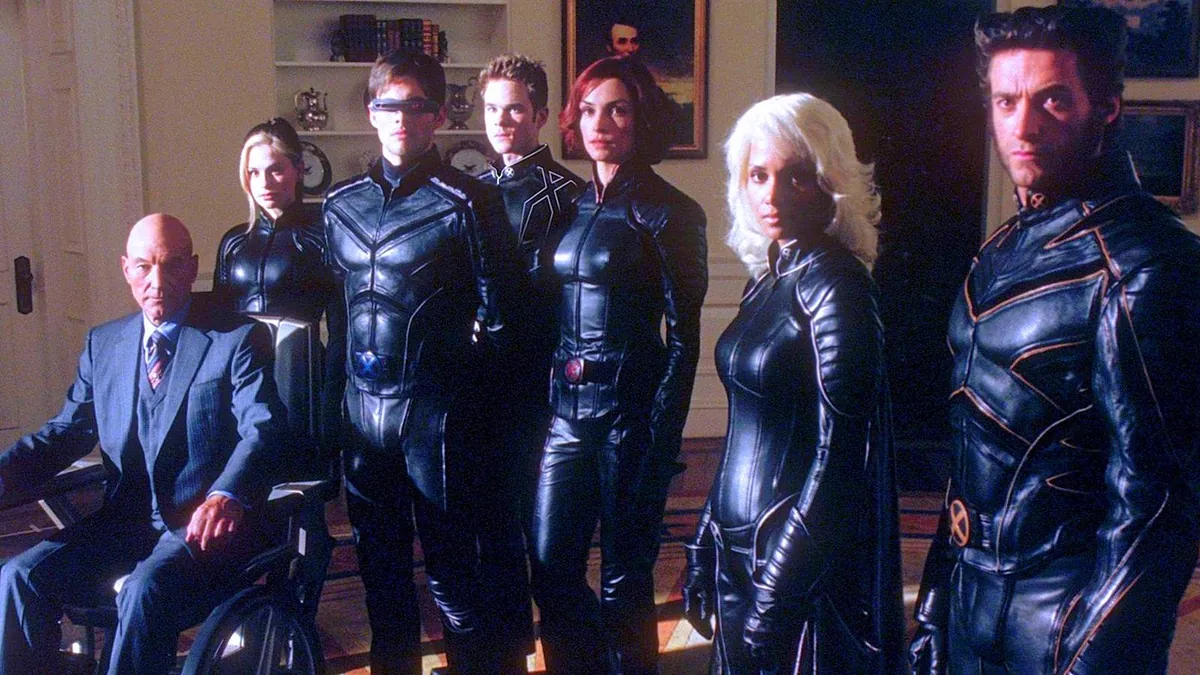
X-Men Korea follows Yeong-seo Go, an ordinary Korean high school student whose mutant powers suddenly awaken. After enrolling at Hoseok Academy for the Gifted (a school name carrying unmistakable Xavier’s School DNA), he becomes entangled in a corporate conspiracy with implications for the future of human evolution. The series comes from Studio LICO, a South Korean digital content company whose credits include the acclaimed coming-of-age WEBTOON Refund High School. CBR’s Jason Wiese reported that SDCC attendees also saw a Professor X redesign specific to this series, an early indicator of how deep the creative investment goes.
The significance isn’t simply putting a Korean protagonist in X-Men gear. Studio LICO is building the world, the visual language, and the social frame from inside South Korean culture — a different proposition entirely from a Western-conceived story that hires consultants for a surface-level authenticity pass. The X-Men franchise has already proven in 2026 that it can sustain radically different creative registers simultaneously; the post-Krakoa relaunch established a no-resurrection rule that fundamentally reframed what mutant death means. X-Men Korea is the most geographically specific creative experiment the franchise has ever attempted, and it’s running on a platform where its target audience actually lives.
Marvel isn’t asking WEBTOON readers to come find superhero comics. It’s asking its own characters to go where those readers already live, and commissioning the storytellers native to that space to write the directions.
Tony’s Girl Is the Genre Marvel’s English-Language Print Line Almost Never Attempts
Writer CRC Payne and artist StarBite are handling Tony’s Girl, which follows a 17-year-old Tony Stark, fresh out of MIT, after Howard Stark enrolls him in etiquette classes to repair his son’s public image. At those classes, Tony meets Meredith McCall, daughter of Howard’s biggest business rival, Creighton McCall. Mutual hostility becomes a relationship neither family would approve of. That’s the structural pitch, and it maps directly onto the forbidden-love framework that drives a significant portion of WEBTOON’s most-read titles.
Marvel’s print line essentially doesn’t publish genre romance. The closest it gets are relationship subplots threaded through action books, where a creative mandate beyond punching is considered a bonus. Tony’s Girl isn’t supplementing the Iron Man comics line — it’s fishing in a completely different pond. The July 29 pull list included Iron Man #3 on its new twice-monthly print schedule; that book and Tony’s Girl share a character and almost nothing else about their readership, genre intent, or creative DNA.
- Original IP, original creators. Every Marvel Originals title is built from scratch with platform-fluent talent — Studio LICO for X-Men Korea, WEBTOON-established writers for the romance and isekai entries — rather than adapting scripts written for the direct market.
- Genre targeting is surgical. Studio LICO’s school-drama framework hits K-drama genre conventions precisely; CRC Payne’s forbidden-romance setup lands in WEBTOON’s largest single audience segment; the Deadpool isekai targets the platform’s self-aware meta-fiction readership.
- Character redesigns confirm creative depth. A new Professor X design exclusive to X-Men Korea means Marvel is authorizing genuine divergence, not just color-swapping existing assets for a tie-in product.
- No print-to-screen pipeline required. These stories exist outside the MCU timeline and main comics continuity, which gives WEBTOON creators room to take structural risks the core line cannot afford.
Our full breakdown of the Deadpool WEBTOON — written by Ucheomaaa with art by Annie Huang — covers the isekai mechanics and what villains like K-Pool signal about where the Marvel Originals initiative is heading. Read alongside X-Men Korea and Tony’s Girl, that title maps out exactly which WEBTOON audience segments Marvel wants to own.

X-Men Korea Has No Launch Date Yet, and That Announcement Is the Real Checkpoint
WEBTOON has not confirmed premiere dates for any of the three Marvel Originals titles as of the SDCC announcements. The structural case for the strategy is already clear regardless of release cadence:
| Dimension | Direct Market Print | WEBTOON Originals |
|---|---|---|
| Distribution | Specialty shops, subscription boxes | WEBTOON app and web, free to read |
| Reading format | Page-turn, landscape/portrait pages | Vertical scroll, mobile-native |
| Dominant genre | Superhero action | Romance, drama, fantasy, isekai |
| Creative sourcing | Established Marvel talent pool | Platform-native studios and writers |
| Primary audience geography | US-dominant | Global; deep South Korean base |
X-Men Korea is the title to watch most closely. It carries the heaviest narrative ambition of the three, the most investment in a non-US cultural frame, and a creative team whose entire reputation was built on the platform it’s now making a superhero story for. The MCU’s own mutant expansion is still in motion — the MCU Professor X shortlist remained unresolved as of late July — which means a successful X-Men Korea run on WEBTOON could quietly influence how Marvel thinks about what a regionally specific, non-Hollywood version of these characters looks like. When WEBTOON posts that launch date, that announcement is the first real test of whether Marvel Originals is a publishing strategy with legs or a very well-executed convention panel.


